
White County Warrant Checks
White County publishes no warrant-only search of its own. The best first stop is Search ARCourts, which can surface public cases and warrant-related docket events. Enter a full legal name or a known case number. Then read the court, department, event dates, and later entries as one timeline. A name match alone does not confirm identity. A public result does not prove a warrant is active today. Keep the citation, summons, court code, and case number close at hand, since those details help a clerk pull the right file and keep a Searcy matter from being confused with a Beebe, Judsonia, or Kensett docket in White County.
- Search the public Arkansas court docket for the person or case number.
- Identify the issuing court and call its clerk for current status.
- Check the city court or police records office for a local ordinance matter.
- Ask the White County Sheriff's Office about service or return records and proper routing.
- Consult an attorney before planning surrender, bond, payment, or a motion.
White County Warrant Record Doors
A White County warrant question can lead to four different offices. The Circuit Clerk holds Circuit Court criminal filings and court-authorized process. District clerks keep traffic, misdemeanor, ordinance, and preliminary felony dockets. City offices may hold municipal papers. The sheriff keeps records tied to service, returns, and custody. Asking one desk to answer all four parts often gets you a partial reply. Start with the court code, because it points to the office that owns the case record. Then ask something narrow: does the docket show the warrant as issued, served, recalled, quashed, or still unresolved? If the clerk says the sheriff holds the execution return, send the next request there. This route beats treating the inmate roster as a warrant list for White County. That page shows custody only, not every outstanding court command.
Warrants in White County: The Main Types
Arkansas courts use several forms of process, and the docket label matters. A warrant is a court command issued within a case or investigation. White County records may also carry the codes FTA, AW, SW, or capias. Capias means a command for custody in one specific setting, not a blanket name for every warrant.
| Warrant Type | How It Arises | Who Issues It |
|---|---|---|
| Arrest warrant | Reasonable grounds are presented for an alleged offense | Circuit judge, district judge, or magistrate |
| Bench or FTA warrant | A required court date or court duty is missed | The judge handling that case |
| Search warrant | A sworn request seeks authority to search for described evidence | An authorized judge or magistrate |
| Traffic or city warrant | A citation, ordinance case, or local court date is not addressed | The proper district or municipal court |
Search ARCourts Warrant Clues
The Arkansas Judiciary began replacing Public CourtConnect with Search ARCourts in stages after a January 2024 announcement. The public form offers participant fields for first, middle, and last name, plus organization or case description. Official help also supports case-number searching. Results can show the court, judge, case type, charges, filings, docket events, future events, judgments, and some documents. Treat the portal as a clue, not notice. Some documents stay closed to public inspection, and a newly issued or sealed warrant may not appear. The statewide official Search ARCourts interface is where a White County warrant search begins, without exposing any private person's record.
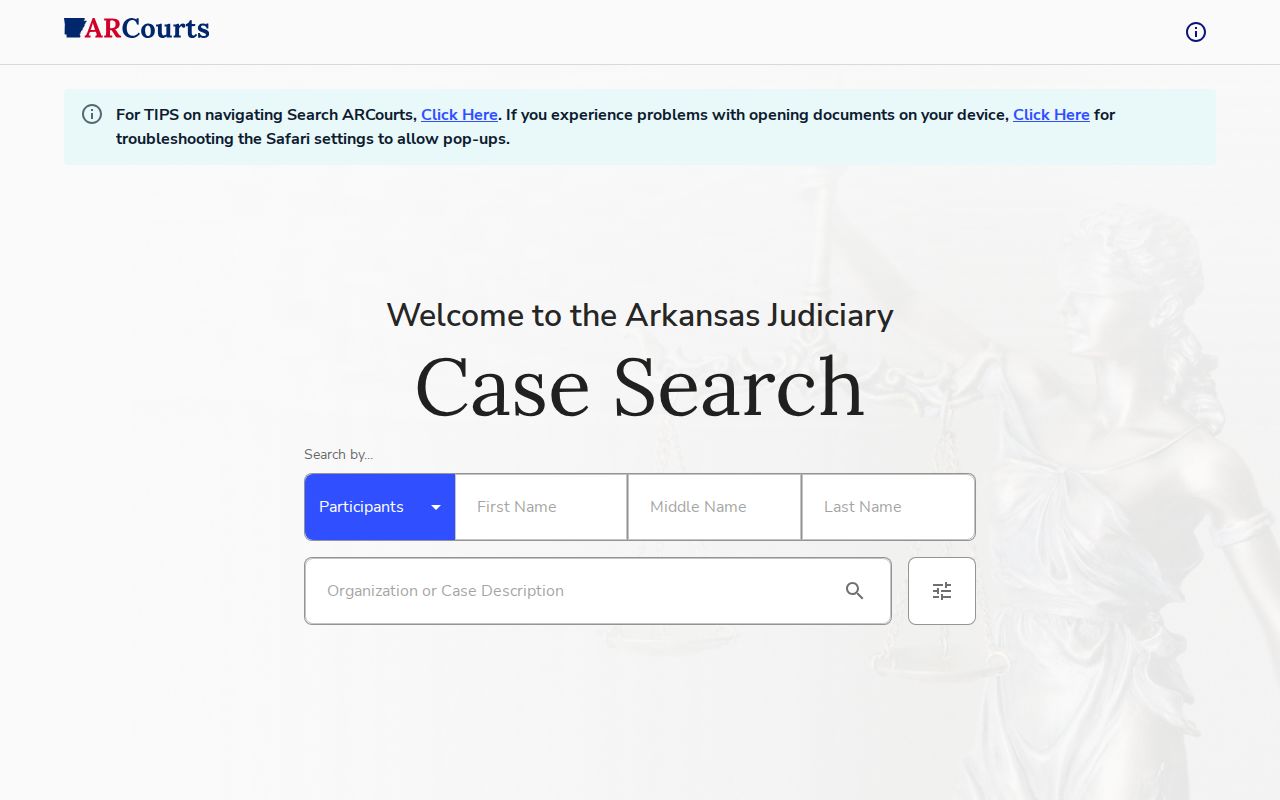
Those fields help locate a case, but the clerk remains the source for current White County warrant status.
| Field | Use | Limit |
|---|---|---|
| First, middle, last name | Participant search | Common names need court and case checks |
| Case number | Direct docket route | Must match the court's format |
| Organization or description | Broader case search | Not a warrant-status field |
White County Warrant Records: What They Show
A public docket may show a warrant event without showing the warrant document itself. Read the whole chain. "Issued" records authorization; "served" or "executed" records an officer's return; "unexecuted" describes the return at that time; "recalled" or "quashed" reflects later court action. A closed case label does not explain each separate event in White County.
| Case or warrant code | White County's plan uses AW for arrest-warrant dockets and SW for search-warrant dockets before a case file opens. |
|---|---|
| Issuing court | Names the Circuit Court, district department, or local court responsible for the process. |
| Alleged offense | Identifies the accusation or statute, not a finding of guilt. |
| Bond term | Shows a condition if the public docket contains one; the current amount still needs court confirmation. |
| Return and status | Later events may show service, nonservice, recall, satisfaction, or another disposition. |
White County Warrant AW and SW Codes
The 23rd Judicial District administrative plan supplies a strong local clue. Its criminal warrant docket uses AW for an arrest warrant and SW for a search warrant when the instrument is returned before a regular case file exists. If a case later begins, the material transfers into it. So a person may first see an unfamiliar warrant docket in White County, then a different criminal case number afterward.
- AW
- An arrest-warrant docket prefix under the district plan.
- SW
- A search-warrant docket prefix, which concerns a search rather than custody of a person.
- FTA
- Failure to appear after a citation, summons, or release condition required attendance.
- Recall or quash
- A later court action withdrawing or setting aside the process.
These codes help locate the right file in White County. They do not by themselves establish present status, so quote the exact docket term when calling the clerk.
White County Warrants: Who Issues, Who Serves
Arkansas law lets a circuit judge, district judge, or magistrate issue an arrest warrant once the legal standard is met. In White County, the Circuit Clerk maintains Circuit Court criminal filings and issues court-authorized process for sheriff delivery. District clerks maintain the lower-court dockets. The Sheriff's Office says patrol deputies serve arrest warrants and civil papers, while Criminal Investigation prepares search-warrant and affidavit-warrant materials for prosecutor review. The jobs form a chain: investigation and affidavit, court review, issuance, service or return, then later docket action. The clerk records the court side. The sheriff keeps enforcement records. Neither role belongs to a private name-search service.
White County Sheriff's Office
1600 East Booth Suite 100
Searcy, AR 72143
501-279-6279
White County Circuit Clerk
300 North Spruce Street
Searcy, AR 72143
501-279-6203
No White County Warrant Roster
White County's sheriff posts no public warrant roster. There is no name search on the office's site. The Most Wanted section exists, yet it shows no articles. That does not mean White County lacks wanted people or open warrants. It just means the page gives no roster a person can count on. The sheriff's inmate-information page is a different tool altogether. It leads to current, new, and released custody records. Custody status and warrant status can overlap, but they are not the same thing. Someone can have an outstanding warrant while absent from the jail roster, and a release does not settle every case behind it. For the case record, turn to Search ARCourts and the issuing clerk. For execution questions, call the sheriff or city police. The ACIC wanted-person system and CitSearch, meanwhile, stay restricted to justice agencies, so no public statewide warrant-only name search exists.
Handling a White County Warrant
Start by pinning down the issuing court, the exact process term, the case number, and the current status. Then ask the clerk what event triggered the warrant and what the court wants next: an appearance, bond, surrender, payment, motion, or proof of compliance. Clerks explain procedure and schedules. They cannot shape legal strategy. A White County attorney can advise on a recall or quash request, a planned surrender, and bond terms. Do not assume that paying an old fine, finishing community service, or visiting another court cancels a warrant; only the issuing court can recall it. If bond applies, confirm the amount and the accepted method with the court or jail first. Arkansas law names several officials who may take bail, though authority and terms vary by case. Remember that bond secures appearance. It does not erase the charge or the record.
Important: Confirm the warrant and surrender plan with the issuing court or an attorney before visiting a law-enforcement office.
White County Citation Payment Limits
The Arkansas citation-payment portal serves participating courts, and it searches on the court plus a first and last name, along with either a citation number or a license or state-ID number paired with a date of birth. Treat it as a citation lookup and payment tool, though, not a broad White County warrant search. The portal's own terms matter: full payment, including its service charge, acts as a guilty or no-contest plea and waives appearance and trial rights. If the court date has already passed or the docket shows FTA, call the issuing clerk rather than assuming payment will recall the warrant. Searcy keeps separate city-court and state district-court clerk lines, so dial the right one. A receipt only proves payment was submitted. It does not prove every court and law-enforcement system has updated yet. Keep that receipt, ask which docket event confirms recall or satisfaction, and recheck the case.
Warrant Record Access Under Arkansas Law
The Arkansas Freedom of Information Act generally backs inspection of public records held by county and city agencies, subject to exemptions. A focused request can seek a docket field, service return, policy, or aggregate log. Name the court or agency, the record type, the date range, and the case or incident number if known. When material is withheld, ask for the nonexempt portions. Get the explanation in writing.
Key rules:
Arkansas FOIA permits requests in several forms and allows actual reproduction or mailing costs.
A.C.A. §16-81-104 addresses who may issue and execute arrest warrants.
Arkansas juvenile statutes and court access rules protect confidential, sealed, and restricted material.
Search ARCourts is public information, not a certified record. For official copies of an open White County record, contact the originating clerk.
A Focused White County FOIA Request
A request for "all warrants" is hard to route and may sweep in restricted data. Go narrow instead. Direct service or return material to the White County Sheriff's records custodian, and docket or filed process to the named court clerk. State the exact category, department, date span, and identifier. If copy costs worry you, ask to inspect first. The Attorney General's materials require the requester to describe the record well enough for the custodian to find it. A custodian may grant access, cite an exemption, report that no record exists, or explain that another office holds it. Request the nonexempt portions either way. Never put a birth date, address, license number, or sensitive case narrative into a web contact form. The WCSO form is generic and promises no warrant-specific routing, fees, or response time.
White County Service Numbers Need Context
The WCSO homepage posts an undated six-month metric of 2,300 "warrants and civil papers served." That figure blends two kinds of process and gives no measurement dates. It cannot stand in as a current White County warrant count. The same panel also reports calls, patrol miles, and average jail population, which marks the number as a broad operations snapshot rather than a warrant total.
Searcy's 2025 State of the City reports separate 2024 monthly averages for city and county cases. Those are caseload measures. They are not outstanding warrants. White County publishes no official public active-warrant total, so treat each number with its source label, date status, and limits attached.
White County Jurisdiction Boundaries
A blank result in White County can have a lawful explanation. Arkansas law keeps juvenile matters confidential. Sealed warrant material also stays out of public view. City ordinance cases may sit with a municipal or district clerk instead of the Circuit Clerk, so the docket you need may live in a different office. Search-warrant affidavits raise their own problem: they can hold victim data, addresses, and confidential investigative facts, and a court may release only part of one. Federal matters take a different path entirely. White County sits in the Central Division of the Eastern District of Arkansas, with court held in Little Rock. PACER and the federal clerk keep the docket there, while the U.S. Marshals Service handles federal enforcement. Search ARCourts cannot deliver a complete federal warrant check. A county office can at least tell you the matter is outside its custody, though it cannot confirm every federal record. The Eastern District of Arkansas FAQ names White County's federal division and where its court sits.
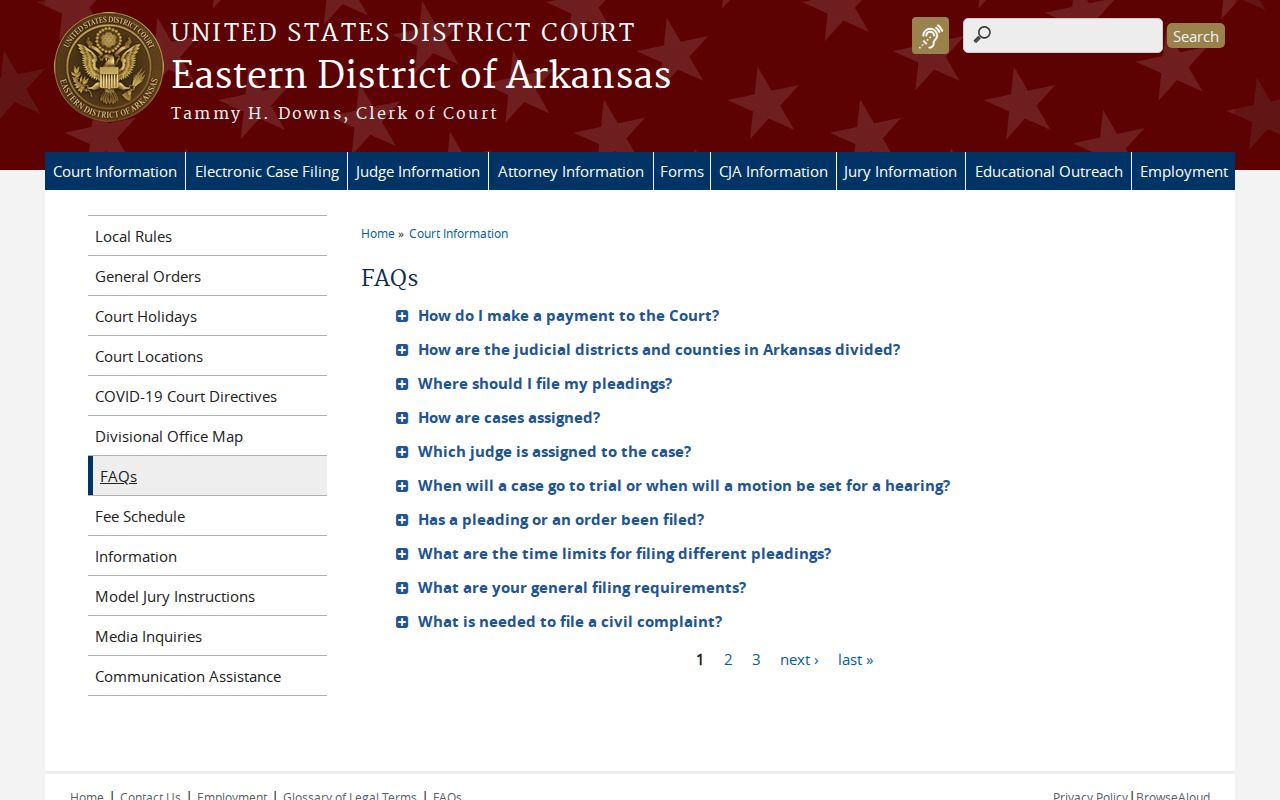
This jurisdiction page shows why federal matters leave the county-court search path. The official PACER pricing FAQ lays out the federal docket-access channel and its fees for White County users.
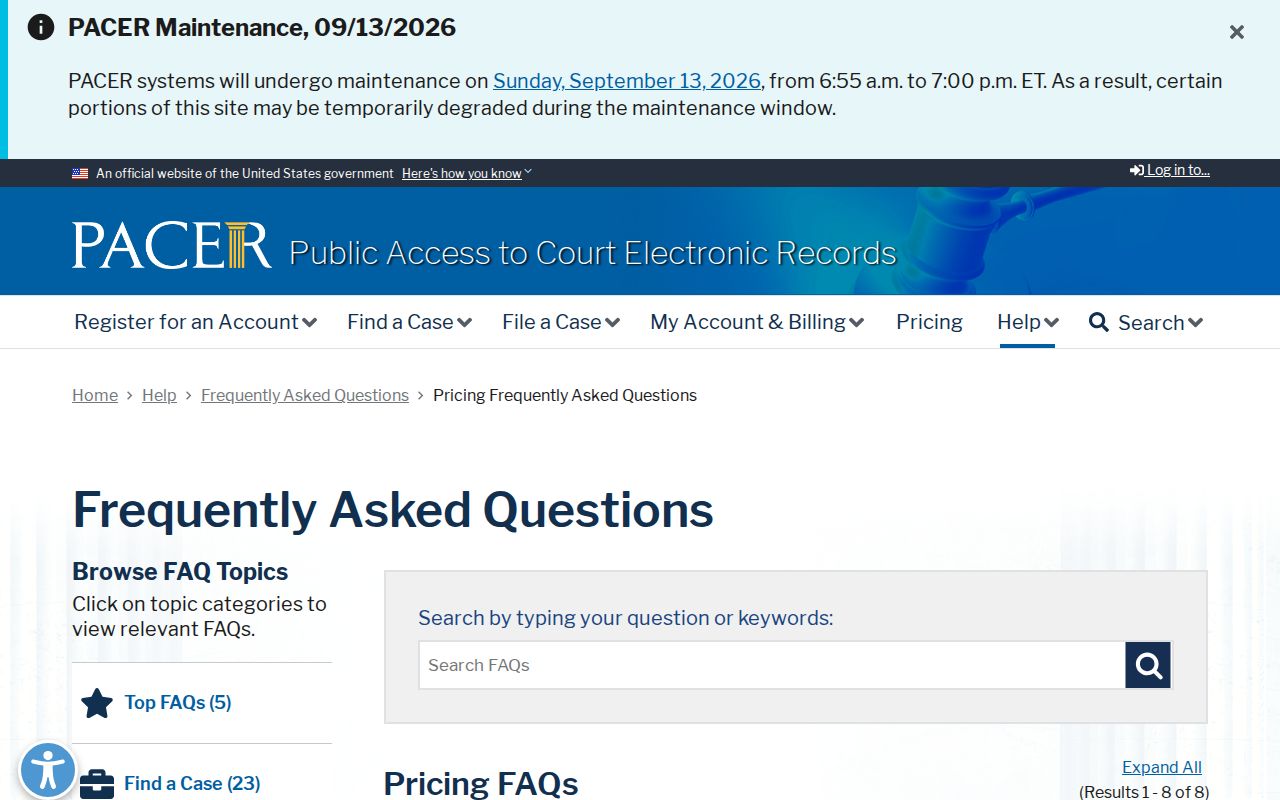
PACER offers federal case records, not a White County warrant lookup and not a stand-in for counsel.
City Warrant Records in White County
White County's five largest cities each take a different route for a city warrant check. Searcy splits its city and state district clerks. Beebe sends court questions to its district clerk. Bald Knob and Judsonia lack current city web contacts, so the Arkansas Judiciary White County directory is the safer starting point. Kensett names both a municipal clerk and a separate open-records contact. Population sets the order of these city pages, not warrant volume.
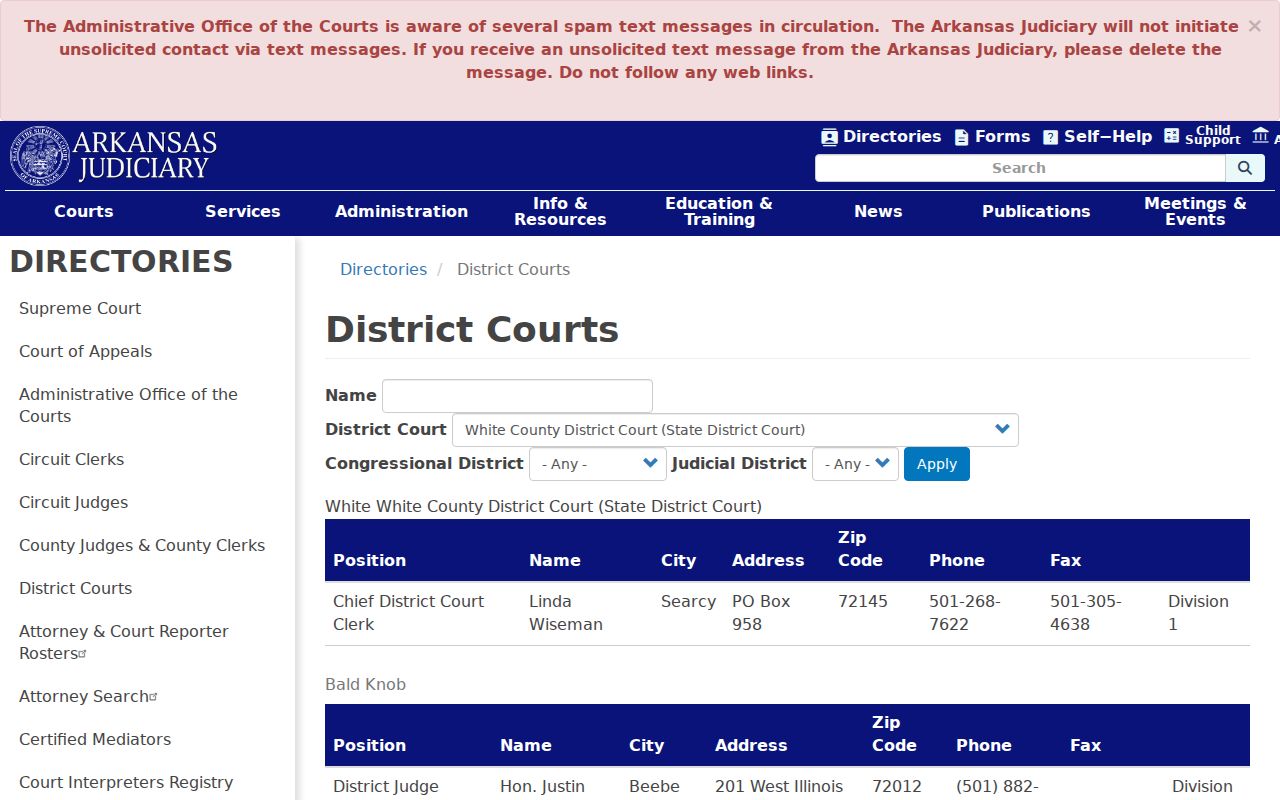
Every city in White County keeps its own docket, so a warrant check starts with that city's clerk.
Searcy Warrants
22,937 residents in 2020; city and state court desks use separate contacts.
Beebe Warrants
8,437 residents in 2020; district court and police share an address but keep different records.
Bald Knob Warrants
2,522 residents in 2020; start with the official district-court directory and verify city contacts.
Judsonia Warrants
1,854 residents in 2020; the state directory supplies the strongest court route.
Kensett Warrants
1,400 residents in 2020; municipal, district, police, and records contacts are distinct.